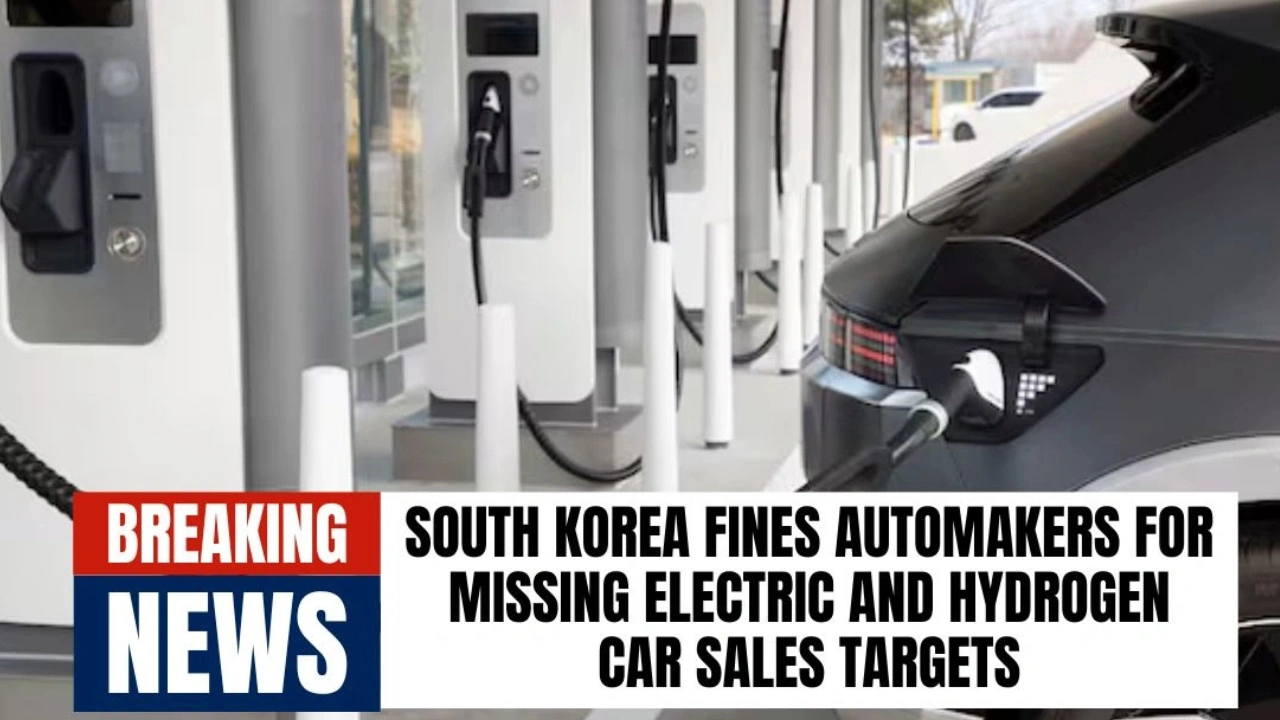
South Korea is taking a firm step toward a cleaner future by pushing automakers to sell more eco-friendly vehicles. From electric cars to hydrogen-powered vehicles, the government wants fewer petrol and diesel cars on the road.
But this push is not just advice anymore—it now comes with penalties. Starting this year, carmakers that fail to meet official green vehicle sales targets will have to pay heavy fines.
While the government believes this move will speed up the transition to cleaner transport, the auto industry says the targets are too difficult to achieve in such a short time.
New Rules for Eco-Friendly Vehicle Sales
The South Korean government has introduced strict new rules to increase the number of electric vehicles (EVs) and hydrogen cars sold each year. These rules apply to major car manufacturers and importers that sell vehicles above a fixed annual volume.
Under the new policy, companies must meet a minimum eco-friendly vehicle sales ratio every year. If they fail to do so, they must pay a contribution fee for each vehicle they fall short.
Penalty Amount Explained
- Automakers must pay 1.5 million Korean won per vehicle if they miss the target in 2026.
- From 2028 onward, the penalty will double to 3 million Korean won per vehicle.
This payment works like a fine, even though the government officially calls it a “contribution.”
Eco-Friendly Vehicle Targets Until 2030
The Ministry of Climate, Energy and Environment is finalizing a revised notice that clearly sets annual targets up to 2030. The long-term goal is bold: 50% of all new vehicles sold must be eco-friendly by 2030.
Target Growth Plan
Here is how the government plans to increase eco-friendly vehicle sales:
| Year | Required Eco-Friendly Vehicle Share |
|---|---|
| 2026 | 28% |
| 2027 | Gradual increase |
| 2028 | Higher penalties begin |
| 2030 | 50% of total new car sales |
These targets include electric cars, hydrogen fuel vehicles, and other low-emission models.
Why Automakers Are Worried
Car companies say these targets are not realistic. According to industry data, electric and hydrogen vehicles made up only 13.5% of new car sales last year in South Korea. Jumping from that number to 50% in just a few years is extremely challenging.
Big Financial Impact on Carmakers
Major automakers like Hyundai Motor and Kia are expected to face large costs. Based on last year’s sales numbers, experts estimate that these companies may have to pay around 130 billion Korean won in penalties this year alone.
An industry insider explained that even though companies can reduce some penalties by increasing their use of renewable energy until 2027, the overall targets are so high that avoiding penalties completely will be nearly impossible.
Why the Government Is Pushing So Hard
South Korea wants to reduce carbon emissions, improve air quality, and meet its global climate commitments. Transport pollution is a major problem, and switching to eco-friendly vehicles is seen as a fast and effective solution.
The government believes that strict rules will:
- Speed up electric vehicle adoption
- Encourage investment in charging and hydrogen infrastructure
- Reduce dependence on fossil fuels
- Help fight climate change
What This Means for Buyers
For regular car buyers, this policy could lead to:
- More electric and hydrogen vehicle options
- Faster expansion of charging stations
- Possible price changes for petrol and diesel cars
- Stronger government support for green vehicles in the future
However, experts also warn that car prices may rise if automakers pass penalty costs to customers.
South Korea’s decision to penalize automakers for missing eco-friendly vehicle targets marks a major shift in its climate policy. While the government is focused on cutting emissions and promoting cleaner transport, the auto industry believes the goals are too aggressive.
With heavy penalties starting immediately and increasing over time, automakers face strong pressure to change fast. Whether this move will successfully speed up green vehicle adoption or create financial strain for companies remains to be seen. One thing is clear—South Korea is serious about driving toward a cleaner future.
FAQs
What happens if automakers miss the eco-friendly vehicle target?
They must pay a penalty of 1.5 million Korean won per vehicle, which increases to 3 million won from 2028.
What vehicles are counted as eco-friendly?
The targets include electric vehicles, hydrogen fuel cars, and other low-emission vehicles approved by the government.
Why are car companies unhappy with this rule?
Automakers say reaching 50% eco-friendly sales by 2030 is unrealistic because current demand and infrastructure are still limited.